.svg)
.svg)
Point Cloud Processing is about transforming the way engineers interact with the physical world. Whether in construction, manufacturing, or product design, every detail matters. Nest3D uses these advancements to interact differently with the physical world. Engineers and architects get to create, refine, and validate complex structures with unmatched accuracy through intelligent automation and high-fidelity digital modeling.
The Role of Point Cloud Processing
Point cloud processing is the method of collecting, analyzing, and converting spatial data, captured through 3D laser scanners or photogrammetry, into usable digital formats. These dense collections of points represent real-world surfaces and geometries in three dimensions, forming the basis for precise modeling.
The industry demands a Point Cloud to CAD Software solution that works with engineering workflows. Each “point” in a point cloud carries XYZ coordinates, representing an exact position in space. When combined, these points form a highly accurate 3D replica of physical objects, environments, or structures. Our focus is the complete, integrated conversion of 3D Point Cloud to CAD, ensuring the resulting DWG files are production-ready immediately upon generation.
.avif)
The Role of Point Cloud Software in Engineering
The rise of Point Cloud Software has revolutionized the interpretation and manipulation of spatial data. One of the most significant advancements offered by our system is the automated adherence to organizational CAD standards. These advanced platforms help users clean, align, segment, and classify massive point datasets.
Modern Point Cloud Software supports workflows that include:
• Data registration: Aligning multiple scans into a unified coordinate system.• Noise filtering: Removing irrelevant or inaccurate points to refine the dataset.• Surface reconstruction: Generating 3D meshes or surfaces from point clouds for visualization or analysis.• Measurement and analysis: Extracting dimensions, distances, and volume information directly from the 3D data.
The automation capabilities of these tools significantly reduce the manual workload associated with traditional surveying and CAD modeling. As a result, engineers can focus more on interpretation and innovation rather than repetitive data handling.
From 3D Point Cloud to CAD: Automated Feature Management
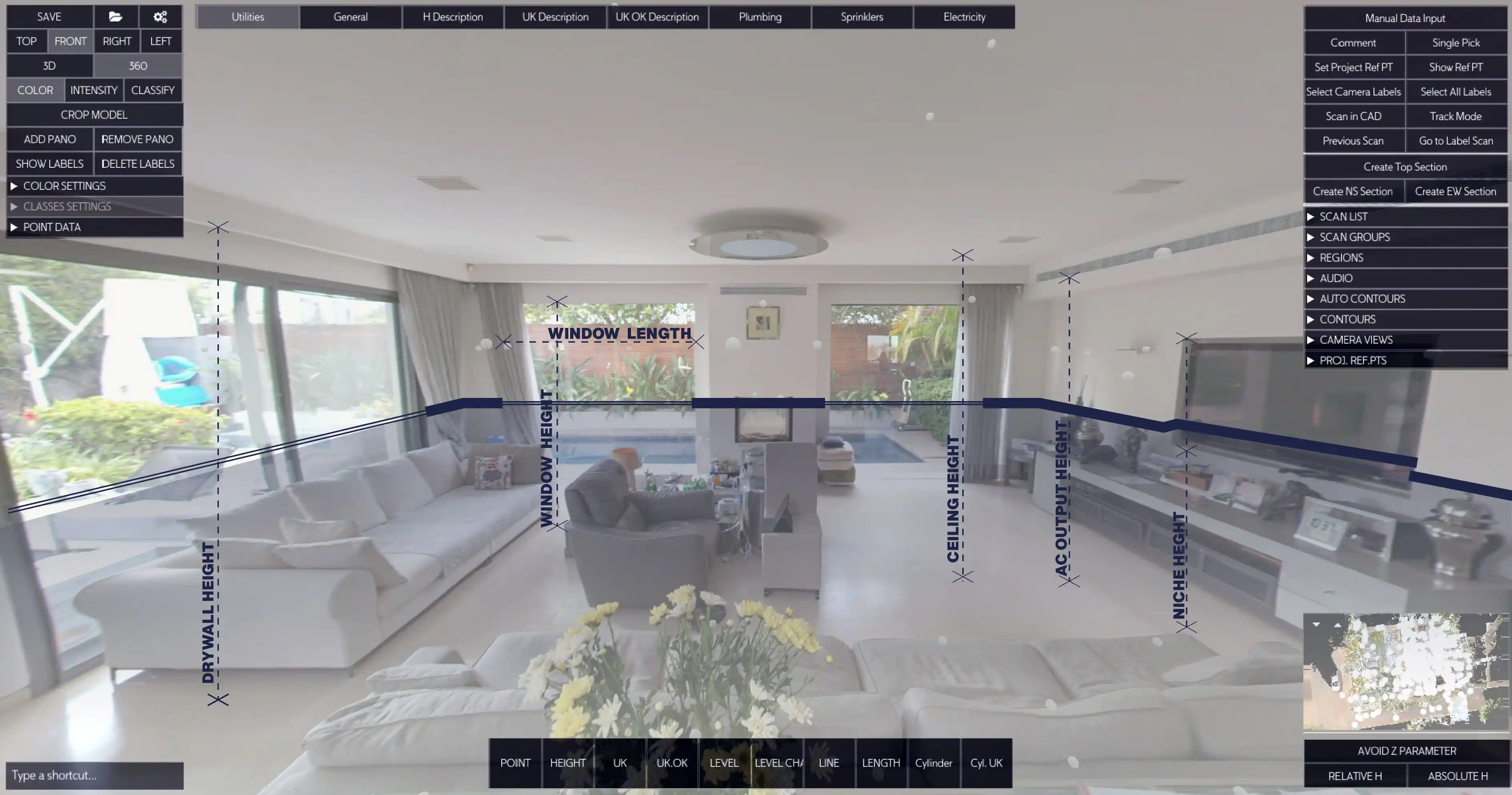
The conversion of 3D Point Cloud to CAD data is perhaps the most valuable outcome of modern point cloud processing. This process translates raw point data into intelligent, editable CAD models that can be used for design, simulation, and manufacturing.
The workflow typically involves several steps:
1 Importing Point Cloud Data: The scan data is imported into a Point Cloud to CAD Software, where it can be visualized and prepared for modeling.
2 Segmentation and Classification: The data is segmented into logical sections, such as walls, floors, or components, based on geometric patterns.
3 Surface Fitting: Accurate surfaces and geometric features are fitted to the point cloud data, enabling engineers to recreate real-world shapes digitally.
4 Model Conversion: The final step transforms processed data into a CAD-friendly format, compatible with major design tools like AutoCAD, SolidWorks, or Revit.
Whether it’s reverse engineering a mechanical component or documenting an as-built structure, 3D Point Cloud to CAD workflows ensure accuracy from concept to completion.
Applications of Point Cloud Processing
Given below is a list of the different applications of point cloud processing. Let’s take a look at them.
1 Civil and Structural Engineering: The technology supports accurate deformation analysis, structural assessments, and renovation planning of bridges, tunnels, and buildings
2 Mechanical and Manufacturing Engineering: A scanned component can be compared against its CAD model to identify deviations within microns of accuracy.
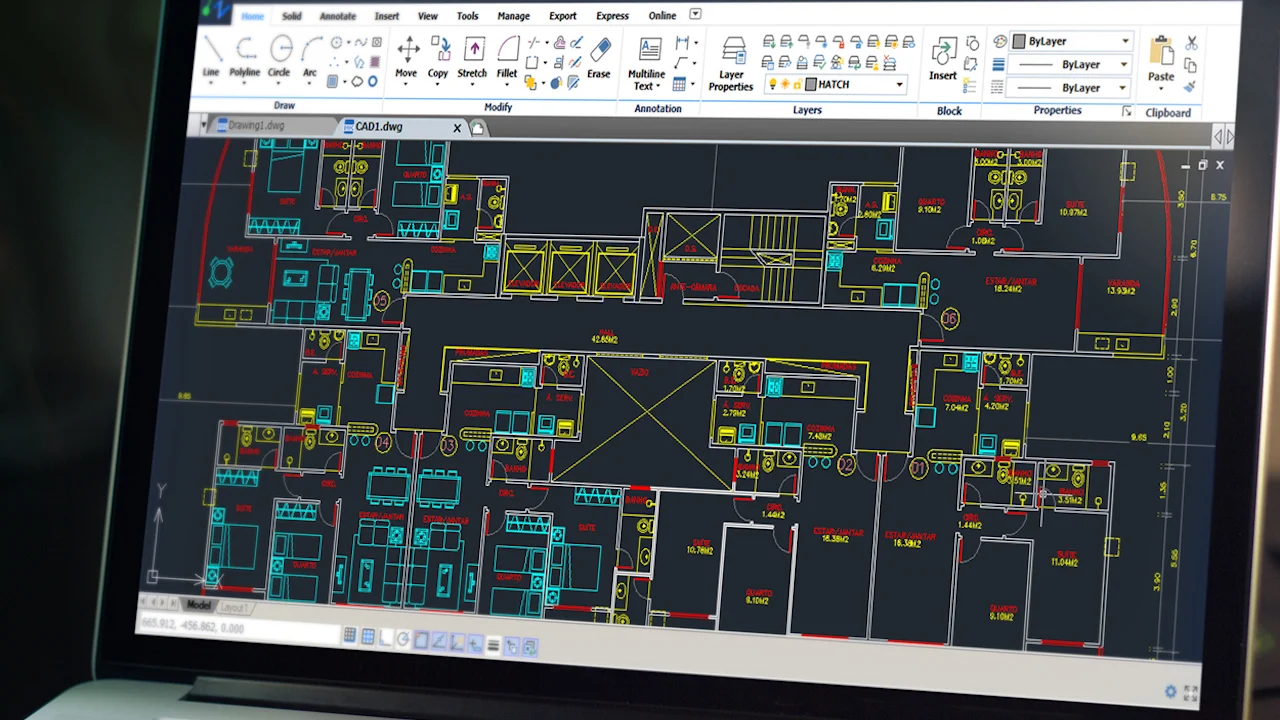
3 Architecture and Construction: Architects and contractors use Point Cloud to CAD Software to generate accurate digital blueprints. This supports renovation, space management, and clash detection in BIM (Building Information Modeling) environments.
4 Energy and Utilities: Engineers navigate complex installations, identify hazards, and simulate future modifications without interrupting operations for power plants, refineries, and pipelines.
5 Aerospace and Automotive Industries: High-resolution 3D scans provide a direct pathway from physical prototypes to fully editable CAD designs for validation and aerodynamic analysis. Captures exact as-built output of the scanners.
Modern Point Cloud to CAD Software
Today’s platforms integrate AI-driven algorithms and machine learning models to automate repetitive tasks like surface detection and object recognition.
Features often include:• Automated feature extraction: Identifying geometric primitives such as planes, cylinders, and cones.• Smart meshing algorithms: Generating accurate surface models with minimal user input.• Interoperability: Seamless data transfer between scanning devices, point cloud processing tools, and CAD environments.• Scalability: Handling massive datasets efficiently, making it possible to process entire facilities or landscapes.
Point cloud processing enhances accuracy and efficiency and drives innovation across disciplines. This digital continuity ensures smoother project execution and better data integrity across all phases.
Benefits of Using Advanced Point Cloud Processing
Here are some of the benefits of using point cloud processing in advanced projects. • Unmatched Accuracy: Point cloud data captures even the smallest surface variations, ensuring high-fidelity models.• Enhanced Collaboration: Multi-user platforms allow teams to access the same 3D datasets simultaneously.• Cost Reduction: Early detection of design errors minimizes rework and project delays.• Comprehensive Visualization: Engineers can view and analyze real-world conditions virtually, improving decision-making.
By leveraging these advantages, organizations can achieve faster project cycles and higher-quality deliverables without compromising precision.
The Future of Point Cloud Processing
As the demand for digital transformation grows, point cloud processing will continue to play a pivotal role in connecting the physical and digital worlds. Emerging technologies like AI-based recognition, AR/VR integration, and cloud-based Point Cloud Software are reshaping how engineers visualize and interact with 3D data.
In the coming years, the fusion of 3D Point Cloud to CAD workflows with real-time scanning and digital twins will redefine engineering efficiency. From smart infrastructure management to automated quality inspection, the possibilities are virtually limitless.
Frequently Asked Questions:
- 1. How will AI and automation shape the future of Point Cloud Processing?
Artificial intelligence is transforming point cloud workflows by automating surface recognition, segmentation, and feature extraction. Engineers rely on fully automated Point Cloud to CAD Software to generate editable models from raw scan data in minutes. Yet, these features are human centered to make sure that the results are as expected with the highest required precision.
- 2. Is point cloud processing only useful for large-scale industrial projects?
That’s a common misconception. While large construction and infrastructure projects use Point Cloud Software extensively, it’s equally valuable in smaller engineering workflows, like equipment retrofits, part inspection, or even small-scale product design.
- 3. Can you give a real example of how 3D Point Cloud to CAD improved a project?
In a recent manufacturing project, engineers used Point Cloud to CAD Software to scan an outdated mechanical assembly and generate a precise digital twin within 24 hours. The resulting CAD model helped redesign the component with zero measurement errors and reduced production lead time by 40%.
- 4. How is point cloud processing better than traditional surveying or manual CAD drafting?
Point Cloud Processing captures millions of data points in minutes, ensuring millimetre-level precision. It also enables engineers to revisit and analyze the captured data anytime without re-measuring on-site.
- 5. Do engineers need to be 3D scanning experts to use Point Cloud Software effectively?
Modern Point Cloud to CAD Software platforms are designed with intuitive interfaces and automation tools that simplify complex tasks. This helps in achieving high-quality results without deep scanning expertise, making advanced 3D modeling more accessible.
.svg)


.svg)
